
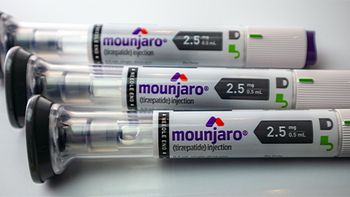
Lilly has temporarily halted UK shipments of Mounjaro until Sept. 1, when new list prices take effect.
Nicholas Saraceno is Editor of Pharmaceutical Commerce. He can be reached at [email protected].
Lilly has temporarily halted UK shipments of Mounjaro until Sept. 1, when new list prices take effect.
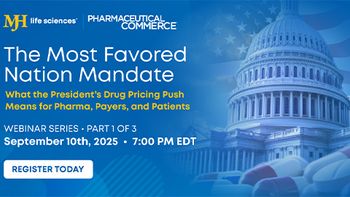
Join us for this premium webinar on September 10!
This episode of Pharma Pulse covers Susan Monarez’s rejection of White House efforts to remove her as CDC director, new analysis on how long-lasting drug shortages expose systemic supply chain weaknesses, and the FDA’s approval of the first generic liraglutide for weight management.
In the final part of his Pharma Commerce video interview, Dave Malenfant, a healthcare supply chain expert, emphasizes that patient access must remain the top priority, even amid steep tariffs, citing cases like orphan drugs and oncology treatments where government flexibility is essential.

CCT is strengthening its Asia-Pacific footprint through new hubs in Tokyo and Mumbai, expanded distributor partnerships in China and Australia, and rebranded regional operations

With potential tariffs reaching 250% and new federal initiatives like SAPIR and most-favored nation pricing reshaping incentives, this explainer explores how major drugmakers are pouring billions into US facilities.
This episode of Pharma Pulse covers ACOG’s renewed support for COVID-19 vaccination during pregnancy, new real-world evidence confirming the safety of dapagliflozin and empagliflozin for type 2 diabetes, and a partnership between EVERSANA and Waltz Health to improve affordability and patient access.
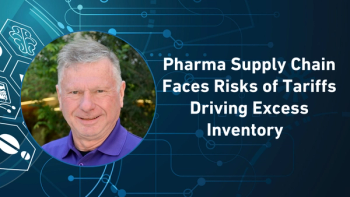
In the fourth part of his Pharma Commerce video interview, Dave Malenfant, a healthcare supply chain expert, cautions that stockpiling to offset tariffs could backfire for pharma companies, leading to expired inventory, higher waste, and costly trade-offs, unless renegotiation strategies are pursued.

As of today, Aug. 27, wholesale distributors must fully comply with the Drug Supply Chain Security Act’s enhanced drug distribution requirements, closing the FDA’s exemption period and advancing efforts to strengthen patient safety and supply chain integrity.

The merger integrates EVERSANA’s commercialization services with Waltz Health’s AI-powered payer tools to address patient affordability, streamline drug access, and reduce costs for high-expense therapies such as GLP-1s.
This episode of Pharma Pulse covers the FDA’s new daily adverse event reporting initiative, the CDC’s appointment of an mRNA vaccine critic to lead its COVID-19 immunization workgroup, and Genentech’s $700 million investment in a North Carolina biologics facility.
The new 700,000-square-foot Holly Springs site—part of Roche’s $50 billion US investment plan—will focus on metabolic and obesity treatments, create 400 jobs, and strengthen domestic biopharma manufacturing amid shifting tariff and drug pricing policies.
This episode of Pharma Pulse covers FDA findings of contamination and safety lapses at Novo’s Bloomington manufacturing plant, the rise of off-label GLP-1 prescribing and its equity challenges, and AbbVie’s acquisition of bretisilocin to advance treatments for major depressive disorder.
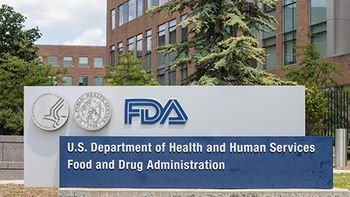
An FDA Form 483 cited unaddressed contamination, pest infestations, and equipment failures at manufacturer’s Bloomington, IN facility, which was acquired in the Catalent buyout.

Addressing the most common concerns surrounding the legislation intended to establish interoperability within the pharma supply chain.
This episode of Pharma Pulse covers a $290 million False Claims Act ruling against CVS Caremark, a new report showing most small medical practices fall short on HIPAA compliance, and research revealing why pharmacists underreport adverse drug reactions.
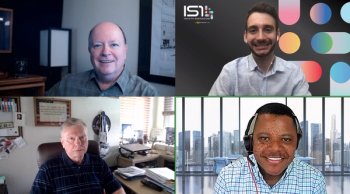
In the ninth part of this roundtable discussion, industry experts discuss how the pharma supply chain is evolving into an integrated business planning function, highlighting the need for diverse skill sets, digital dexterity, and AI-enabled capabilities to prepare Gen Z and future leaders for patient-centric problem solving.

A federal judge tripled damages against the pharmacy benefits manager after finding it encouraged inflated Medicare drug claims and underpaid pharmacies.
This episode of Pharma Pulse covers the White House–EU agreement on pharmaceutical tariffs, Johnson & Johnson’s $2 billion expansion of its North Carolina manufacturing site, and a new federal rule requiring e-prescribing and prior authorization tools in certified EHR systems.

The new framework, set to take effect Sept. 1, limits tariffs on pharmaceutical imports to 15% but follows months of shifting proposals, including threats of tariffs as high as 250%.
In the fourth part of his Pharma Commerce video interview, Mark Lee, MarqVision’s founder and CEO, discusses how healthcare companies and regulators can strengthen defenses against counterfeit drugs by integrating AI with physical authentication methods and enabling secure, anonymized data sharing across the pharm sector.
The company will be heavily investing over the next decade to build a new biopharmaceutical facility in Holly Springs, NC, creating 120 jobs and reinforcing its $55 billion pledge to strengthen US manufacturing, R&D, and innovation.
This episode of Pharma Pulse covers Catalent’s decision to cut 350 jobs at its Baltimore gene therapy site, new data showing rising adoption of digital tools for glycemic control in type 1 diabetes, and research linking severe childhood COVID-19 to heightened cardiovascular risk later in life.
In the third part of his Pharma Commerce video interview, Dave Malenfant, a healthcare supply chain expert, discusses how predictive analytics, AI, and automation are streamlining US pharmaceutical manufacturing—cutting overhead, boosting efficiency, and enhancing safety.
The CDMO will be cutting 350 jobs at its Baltimore gene therapy site after a major client’s demand shift, less than a year after Novo Holdings’ $16.5 billion acquisition.
This episode of Pharma Pulse explores a Battelle–Aprecia partnership with HHS and DARPA to accelerate on-demand drug manufacturing, a multi-billion-dollar Merck KGaA–Skyhawk collaboration to advance RNA therapies in neurology, and how pharmacist-led telehealth is improving diabetes care during emergencies.
In the third part of his Pharma Commerce video interview, Mark Lee, MarqVision’s founder and CEO, describes how AI-driven surveillance and image recognition vastly outpace traditional brand protection methods, enabling pharmaceutical companies to detect and remove millions of counterfeit listings across global online marketplaces and social media in real time.

The EQUIP-A-Pharma program will combine Battelle’s synthesis platform and Aprecia’s 3D printing technology to produce APIs and finished drugs at the same site, aiming to strengthen US pharma supply resilience and support essential medicines.
This episode of Pharma Pulse covers Novo Nordisk’s FDA win for Wegovy in MASH-related liver fibrosis, new research on a promising drug combination against resistant influenza strains, and how community pharmacies are strengthening healthcare access in underserved areas.
In the second part of his Pharma Commerce video interview, Mark Lee, MarqVision’s founder and CEO, explains how wide regional price gaps and lack of visibility in global distribution create openings for counterfeit sellers—with many now specializing in categories like oncology—who exploit platforms such as Facebook and Instagram to market fake drugs.